
She saw the light again. With some irony in her interrogation, for when one woke at all, one’s relations changed, she looked at the steady light, the pitiless, the remorseless, which was so much to her, yet so little to her, which had her at its beck and call (she woke in the night and saw it bent across their bed, stroking the floor), but for all that she thought, watching it with fascination, hypnotized, as if it were stroking with its silver fingers some sealed vessel in her brain whose bursting would flood her with delight, she had known happiness, exquisite happiness, intense happiness, and it silvered the rough waves a little more brightly, as daylight faded, and the blue went out of the sea and it rolled in waves of pure lemon which curved and swelled and broke upon the beach and the ecstasy burst in her eyes and waves of pure delight raced over the floor of her mind and she felt, It is enough! It is enough!
From “To the Lighthouse” (73-4)
Alfred A. Knopf, 1991
First published by Hogarth Press, 1927
So much has been written about Virginia Woolf that I am not even going to attempt to put my own thoughts down here except to say that she is one of my favorite writers of all time and her work profoundly affects me.
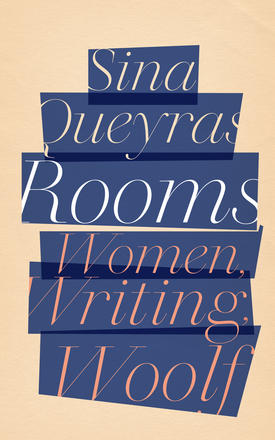
I just finished reading Rooms: Women, Writing, Woolf (Coach House Books, 2022) by Sina Queyras and even they questioned their own right to say anything about the late, great Woolf. They shouldn’t have worried, however, because the text is an interesting mix of the author’s experience with their own writing life and Woolf’s work.
One of the things I most relate to in this book is how Queyras describes their quest to inhabit a room to work in and how incredibly hard it is to achieve this. Life gets in the way, and rooms have their price. Along with the author, I’ve spent my entire life struggling to find a room of my own, or even a corner, or even the head space and peace of mind to THINK in.
But how, Woolf asks, facing the enormity of the questions she has unearthed, how can I further encourage you to go about the business of life? In all this chaos? And for us, the new, endless chaos?
In light of all this, one must ask, what is the right relationship of room to our time? Of writing to life? Young writers, as Woolf says, please attend. I have some statements to offer:
A room full of women lock arms and begin to move the room toward higher ground.
They hold tight and whip themselves forward, toward the sun.
p. 157-8
But it’s not really about the room, is it? It’s about the work and claiming your own time and space and mind. I’ve always admired people who were uncompromising, and often thought that this must be the key to success. However, I’m starting to think that they key is, in fact, to keep going.
Read-alikes:
Kate Chopin, The Awakening
Elizabeth Hardwick, The Collected Essays of Elizabeth Hardwick
Sylvia Plath, The Letters of Sylvia Plath

 Labyrinth Literature