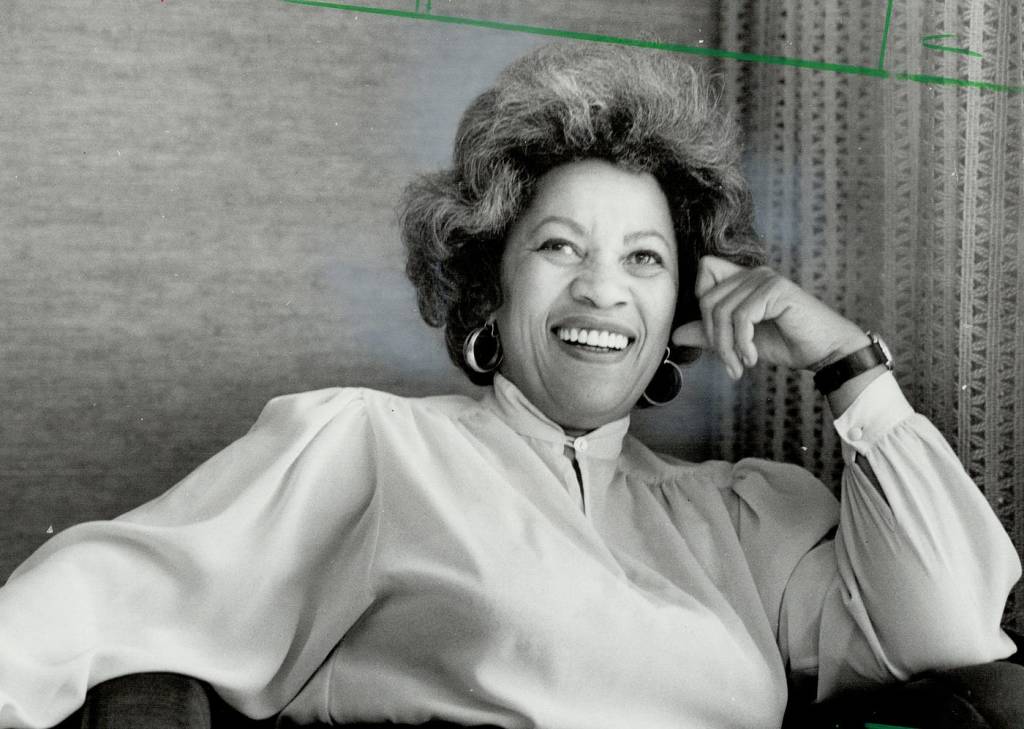
The first thing I read by Toni Morrison was Beloved, which shook me to my core and forever altered my brain. I’ve since read almost all of her work and she is definitely one of my top favorite writers of all time. Which all sounds obvious, because, duh, TONI MORRISON. What more needs to be said?
I am a writer and my faith in the world of art is intense but not irrational or naive. Art invites us to take the journey beyond price, beyond costs into bearing witness to the world as it is and as it should be. Art invites us to know beauty and to solicit it from even the most tragic of circumstances. Art reminds us that we belong here. And if we serve, we last. My faith in art rivals my admiration for any other discourse. Its conversation with the public and among its various genres is critical to the understanding of what it means to care deeply and to be human completely. I believe.
From The Source of Self-Regard (53)
Alfred A. Knopf, 2019

Morrison’s The Bluest Eye continues to be one of the most challenged books in America. Many of her other books have been challenged as well. As a librarian, I have a lot of feelings about the current climate of attacking the right to read, which is one of the mainstays of our democracy. I would encourage everyone to take a look at Unite Against Book Bans, and join in the fight against censorship. I especially enjoy their “book resumes” — here are the ones for The Bluest Eye and Beloved. These are wonderful tools for librarians, teachers, administrators, and parents who are looking for evidence about why a book should stay in a library’s collection.

For fans of literary criticism, a new book is coming out in July — publisher’s description below:
“Toni Morrison’s readers and critics typically focus more on the “what” than the “how” of her writing. In Toni Morrison and the Geopoetics of Place, Race, and Be/longing, Marilyn Sanders Mobley analyzes Morrison’s expressed narrative intention of providing “spaces for the reader” to help us understand the narrative strategies in her work.
Mobley’s approach is as interdisciplinary, intersectional, nuanced, and complex as Morrison’s. She combines textual analysis with a study of Morrison’s cultural politics and narrative poetics and describes how Morrison engages with both history and the present political moment.
Informed by research in geocriticism, spatial literary studies, African American literary studies, and Black feminist studies at the intersection of poetics and cultural politics, Mobley identifies four narrative strategies that illuminate how Morrison creates such spaces in her fiction; what these spaces say about her understanding of place, race, and belonging; and how they constitute a way to read and re-read her work.”
Read-alikes:
Lorraine Hansberry, A Raisin in the Sun

 Labyrinth Literature