To be a young woman is to face your own annihilation in innumerable ways or to flee it or the knowledge of it, or all these things at once. “The death of a beautiful woman is, unquestionably, the most poetical topic in the world,” said Edgar Allan Poe, who must not have imagined it from the perspective of women who prefer to live. I was trying not to be the subject of someone else’s poetry and not to get killed; I was trying to find a poetics of my own, with no maps, no guides, not much to go on. They might have been out there, but I hadn’t located them yet.
The struggle to find a poetry in which your survival rather than your defeat is celebrated, perhaps to find your own voice to insist upon that, or to at least find a way to survive amidst an ethos that relishes your erasures and failures is work that many and perhaps most young women have to do. In those early years, I did not do it particularly well or clearly, but I did it ferociously.
I was often unaware of what and why I was resisting, and so my defiance was murky, incoherent, erratic. Those years of not succumbing, or of succumbing like someone sinking into a morass and then flailing to escape, again and again, come back to me now as I see young women around me fighting the same battles. The fight wasn’t just to survive bodily, though that could be intense enough, but to survive as a person possessed of rights, including the right to participation and dignity and a voice. More to survive, then: to live.
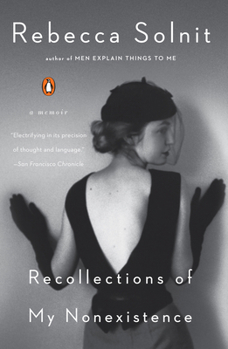
From Recollections of My Nonexistence (4)
Viking, 2020
Read-alikes:

 Labyrinth Literature